
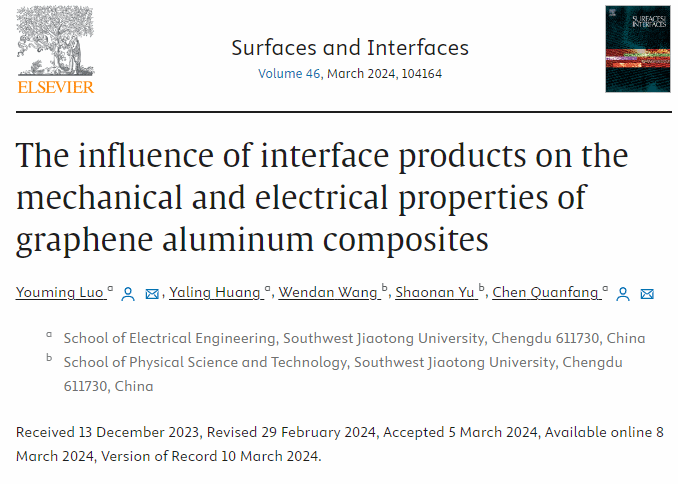
陈全芳教授团队高导电高强度铝基复合导电材料发表在Surfaces and Interfaces
近日,学校437ccm必赢国际陈全芳教授团队在高导高强石墨烯铝复合材料领域取得重要进展,相关研究成果以公司为第一单位,以“The influence of interface products on the mechanical and electrical properties of graphene aluminum composites”为题,发表在国际知名期刊《Surfaces and Interfaces》(JCR一区,IF=6.2)上。必赢网址bwi437为论文唯一单位,437ccm必赢国际博士研究生罗友明为论文的第一作者,437ccm必赢国际陈全芳教授为该论文的通讯作者。...
 2024-04-10
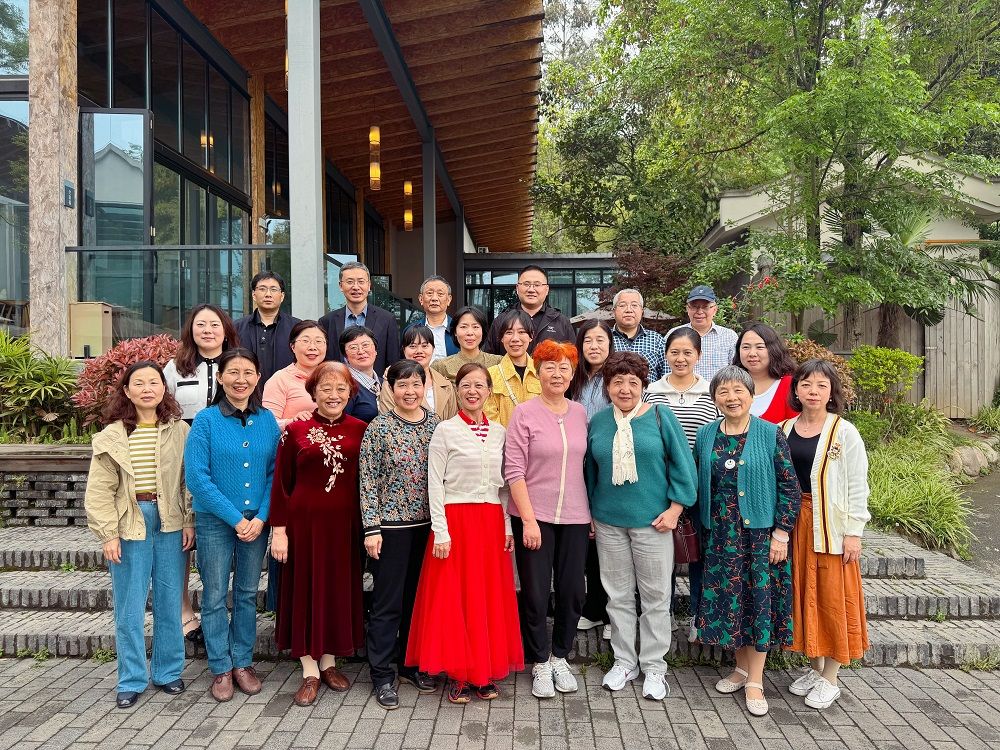
437ccm必赢国际组织退休教职工春游踏青活动
人间最美四月天,清明出游正当时。为丰富退休教职工精神文化生活,促进身心健康,电气公司党委、学院工会于4月3日组织了退休教职工春游踏青活动,带领老同志们走进这春意盎然的美好时节。春游活动前往崇州市白头镇大雨村,大雨村是一个由贫困村转变为社会主义新农村的鲜明缩影,退休老教师们一边欣赏人间四月的美景,一边感叹新农村建设给当地人居环境带来的巨大改善。大雨村还曾经走出一位将毕生奉献给中国盐湖事业的中国科学院院士、...
2024-04-09
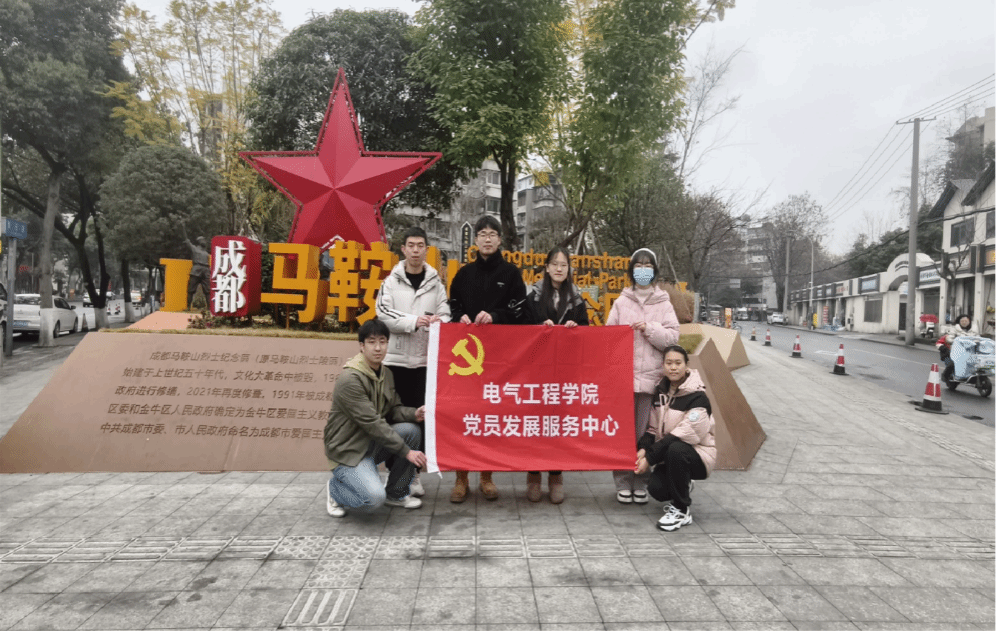
公司两支队伍入选2024年全国老员工志愿宣讲团
为深入学习宣传贯彻习近平新时代中国特色社会主义思想和党的二十大精神,落实“强国复兴有我”群众性主题宣传教育活动相关要求,引导动员青年员工大力弘扬井冈山精神、延安精神、“两弹一星”精神,团中央青年志愿者行动指导中心联合有关单位,开展弘扬中国共产党人精神谱系志愿宣讲活动,面向全国高校遴选老员工志愿宣讲团队。近日,老员工志愿宣讲团队入选名单已公布,必赢网址bwi437共五支队伍从全国八百多所高校的千余只队伍中脱颖而出,...
2024-04-07
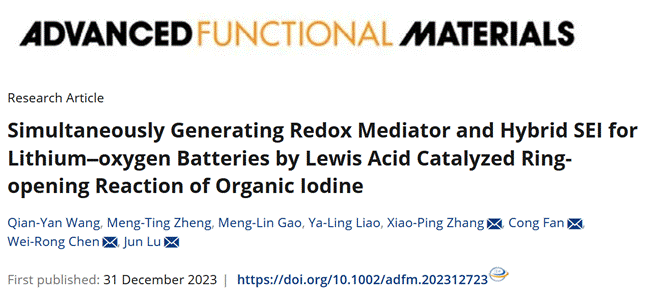
陈维荣教授团队张晓平副教授在Advanced Functional Materials发表论文
近日,学校437ccm必赢国际陈维荣教授团队张晓平副教授等人在锂氧气电池负极保护和能量利用效率提升领域取得重要进展,相关研究成果以公司为第一单位,以“Simultaneously Generating Redox Mediator and Hybrid SEI for Lithium–oxygen Batteries by Lewis Acid Catalyzed Ring‐opening Reaction of Organic Iodine”为题,发表在国际知名期刊《Advanced Functional Materials》(中科院一区Top期刊,IF=19)上。必赢网址bwi437为论文第一单位,...
2024-04-07
【研究生教育】关于437ccm必赢国际2024年拟录取统考硕士研究生(不含联合培养专项)导师双选的通知
04-11【研究生教育】关于2024年007联合培养专项(085800)能源动力专业硕士研究生导师双选的通知
04-10【员工工作】【资助】关于开展“龙年助翼,勤工筑梦”2024年勤工助学之星评选活动的通知
04-09【员工工作】437ccm必赢国际关于开展必赢网址bwi4372023年度星级志愿者评定工作的通知
04-07【研究生教育】【博士】437ccm必赢国际关于报送2024年6月博士授位材料及毕业信息的通知
04-02【研究生教育】【硕士】437ccm必赢国际关于报送2024年6月硕士授位材料及毕业信息的通知
04-02【研究生教育】077 联合培养专项 (085800)能源动力专业2024年硕士研究生拟录取名单
03-29【研究生教育】437ccm必赢国际2024年硕士研究生拟录取名单(不含联合培养专项)
03-27
关于开展2024年上半年教团队格认定工作的通知
04-02关于选派2024年国家建设高水平大学公派研究生项目博士生导师短期出国交流项目的通知
02-28437ccm必赢国际关于选派2024年国家国家公派高级研究学者、访问学者、博士后以及高校国际组织团队出国留学项目工作的通知
02-28公司党委关于2023-04期党员发展对象确定及选培的有关通知
11-06关于公布公司党委2023-02期入党积极分子党课培训结业名单的通知
11-03437ccm必赢国际关于教师、其他专技系列五级及以下岗位等级晋升的公示
10-25公司党委关于2023-02期入党积极分子党课培训安排的通知
10-12公司党委(电气分党校)2023-02期入党积极分子党课培训开班通知
10-07
关于437ccm必赢国际2024年拟录取统考硕士研究生(不含联合培养专项)导师双选的通知
04-11关于2024年007联合培养专项(085800)能源动力专业硕士研究生导师双选的通知
04-10【博士】437ccm必赢国际关于报送2024年6月博士授位材料及毕业信息的通知
04-02【硕士】437ccm必赢国际关于报送2024年6月硕士授位材料及毕业信息的通知
04-02077 联合培养专项 (085800)能源动力专业2024年硕士研究生拟录取名单
03-29437ccm必赢国际2024年硕士研究生拟录取名单(不含联合培养专项)
03-272024年437ccm必赢国际全日制硕士研究生复试名单(联合培养专项)
03-222024年437ccm必赢国际全日制硕士研究生复试名单(不含联合培养专项)
03-21
第十七届中国高校电力电子与电力传动学术年会(SPEED 2024)会议通知(第一轮)
10-19二号通知 | 第二届轨道交通能源与动力系统技术发展大会将于8月10日在天津隆重召开!
07-20会议通知|第二届轨道交通能源与动力系统技术发展大会将于8月10-11日在天津举办!
06-01国家轨道交通电气化与自动化工程技术研究中心开放课题(第五期)申请通知
10-26关于“2022中国轨道交通能源与动力系统技术大会”延期召开的通知
10-08第37届中国高等学校电力系统及其自动化专业学术年会征文通知
07-072022轨道交通能源与动力系统技术发展大会通知
06-25国家轨道交通电气化与自动化工程技术研究中心(成都国佳电气工程有限公司)开放课题(第四期)公示
04-14
【资助】关于开展“龙年助翼,勤工筑梦”2024年勤工助学之星评选活动的通知
04-09437ccm必赢国际关于开展必赢网址bwi4372023年度星级志愿者评定工作的通知
04-07437ccm必赢国际关于2024年“踔厉奋发·筑梦青春” 自强之星拟推荐名单公示
04-01437ccm必赢国际关于开展2024年“踔厉奋发·筑梦青春” 自强之星评选活动的通知
03-29【共青团评优】437ccm必赢国际团委2023年度共青团工作优秀个人和优秀集体拟推荐名单公示
03-25第十一届“交通·公益”志愿服务季暨必赢网址bwi437第二届志愿服务项目大赛通知
03-25【劳动教育】437ccm必赢国际关于开展第五期“劳动实践活动”的通知
03-24437ccm必赢国际2023-2024学年第5次宿舍文明检查成绩公示及情况通报
03-18
437ccm必赢国际强化实验室安全管理并开展2024年实验室安全培训
03-30437ccm必赢国际开展春季开学实验室安全检查工作
03-01437ccm必赢国际开展寒假前实验室安全检查工作
01-23437ccm必赢国际开展2023-2024学年第一学期末期安全检查工作
12-15437ccm必赢国际开展2023-2024学年第一学期中期安全检查工作
10-22437ccm必赢国际开展2023-2024学年第一学期安全检查工作
09-06437ccm必赢国际关于申报“2024-2026年中央高校改善基本办学条件项目申报”公示
06-16437ccm必赢国际开展实验室安全检查工作
06-15
 科研
科研
科研
 平台
平台
平台
教师
教师
员工
员工
员工
员工